

PS Ng’eno calls for stronger public-private partnerships to accelerate Kenya’s green transition
Principal Secretary for the State Department for Environment and Climate Change, Dr. Eng. Festus K. Ng’eno, has called for stronger public-private partnerships and increased investment in digital climate solutions to accelerate Kenya’s transition towards a resilient, low-carbon and sustainable economy.
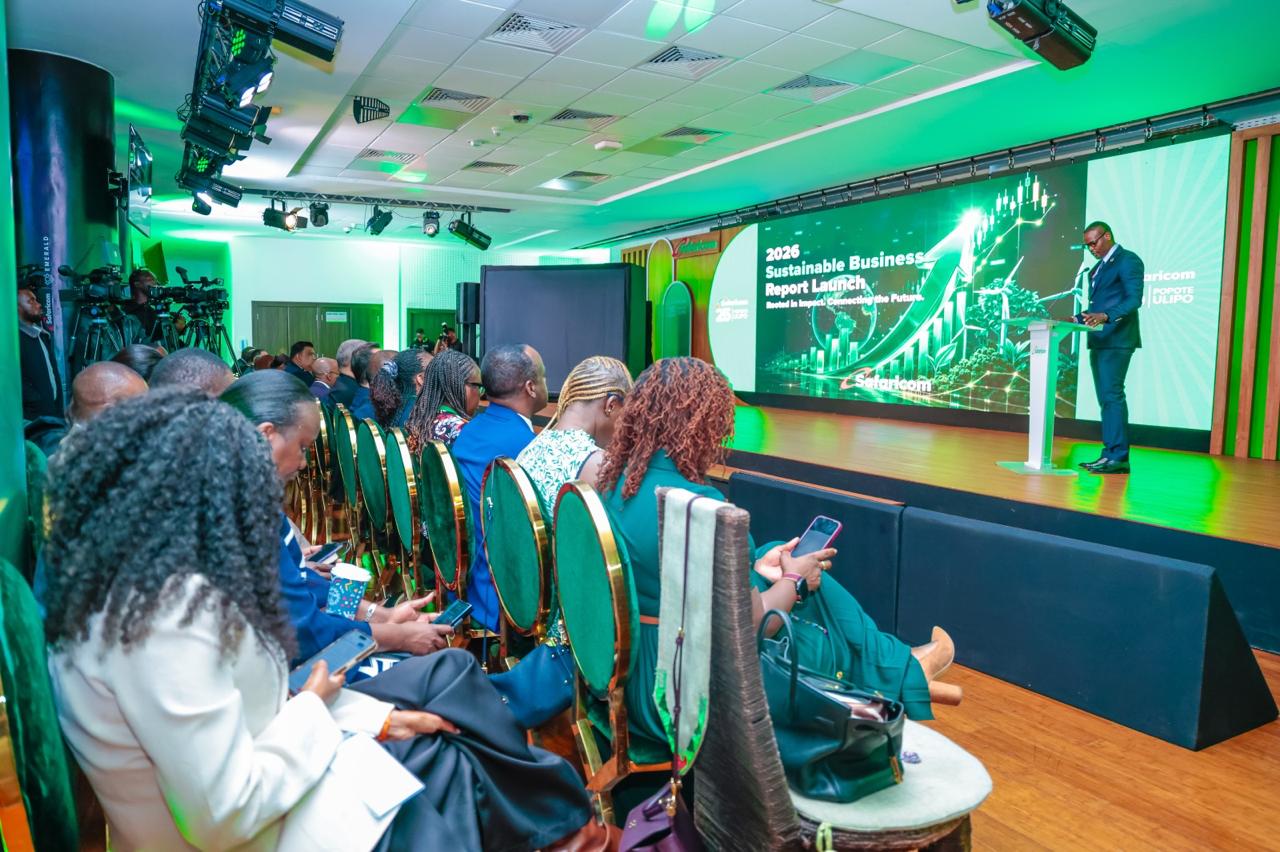
Dr. Ng’eno made the remarks during the launch of Safaricom PLC’s 2026 Sustainable Business Report at the Michael Joseph Centre, Safaricom House, Nairobi, where he was hosted by Safaricom PLC Group Chief Executive Officer, Dr. Peter Ndegwa. He commended the telecommunications company for integrating environmental sustainability into its business operations and leveraging digital technology to advance climate action.
The report, themed “Rooted in Impact, Connecting the Future,” highlights the importance of anchoring sustainable growth in communities and ecosystems while harnessing digital innovation to address emerging environmental challenges. Dr. Ng’eno emphasized that climate change requires coordinated action by government, the private sector, communities and development partners, noting that sustainable development must be supported by measurable commitments and verifiable results.
The Principal Secretary underscored the urgent need to strengthen climate preparedness as Kenya navigates the October–December short rains season, warning that forecasts must translate into timely action to protect lives, livelihoods and infrastructure. He called on county governments and disaster management teams in high-risk areas, particularly Western Kenya, the Rift Valley and low-lying flood basins such as the Tana Delta, to intensify preparedness measures.
He urged communities to heed official weather advisories, farmers to plan their activities using seasonal forecasts, and authorities to clear drainage systems and prepare for potential flooding. Dr. Ng’eno also raised concern over the expansion of lakes in the Rift Valley, particularly Lakes Baringo and Bogoria, noting the risks posed by heavy rainfall to surrounding communities, infrastructure, agricultural land and sensitive ecosystems.
He emphasized the importance of translating climate information into early action through effective early warning systems, reliable communication networks and coordinated disaster risk management. The Principal Secretary further called for climate-responsive urban planning, including the development of “sponge cities” that incorporate green spaces, wetlands and effective drainage systems to absorb stormwater, reduce flooding and conserve water.
Dr. Ng’eno reaffirmed the Government’s commitment to the National Tree Growing Agenda, which seeks to grow 15 billion trees by 2032 and increase Kenya’s national tree cover to 30 per cent. He recognized Safaricom’s contribution to environmental restoration, including its tree-growing initiatives and partnership with the Ministry through the JazaMiti App, which enables individuals and institutions to register, track and verify tree-growing activities.
The Principal Secretary noted that the company’s pledge to plant five million trees represents an opportunity to support ecosystem restoration while creating economic opportunities for communities involved in conservation. He called for continued investment in restoration initiatives across key landscapes, including Kakamega, Kaptagat and the Mau Forest Complex, emphasizing that tree growing must go beyond increasing tree numbers to deliver biodiversity conservation, climate resilience and sustainable community livelihoods.
The Principal Secretary highlighted Safaricom’s decarbonization pathway towards net-zero emissions by 2050 as an example of how businesses can contribute to Kenya’s climate commitments under the Paris Agreement. He commended the company’s efforts to expand solar-powered base transceiver stations, adopt artificial intelligence and Internet of Things technologies for energy management, and reduce reliance on diesel-powered infrastructure.
Dr. Ng’eno also underscored the importance of corporate leadership in advancing Kenya’s transition to a circular economy, guided by the Sustainable Waste Management Act. He cited initiatives in waste diversion, the refurbishment and recycling of network hardware, and the responsible recovery of electronic waste as practices that can inform wider private sector action. He called on businesses to embrace resource efficiency, reduce waste generation and invest in sustainable production and consumption models.
Dr. Ng’eno noted that digital infrastructure offers significant opportunities to strengthen climate resilience, particularly through early warning systems, mobile climate alerts and innovative financial services. He acknowledged Safaricom’s role in disseminating more than 70 million SMS alerts to communities in flood-prone and other high-risk areas, helping improve access to information on potential weather-related threats.
The Principal Secretary also highlighted the potential of digital financial solutions to support green bonds, clean cooking initiatives and micro-insurance products for communities affected by drought and other climate-related shocks. He called for continued investment in digital inclusion to ensure that vulnerable communities benefit from Kenya’s transition to a green and technology-driven economy.
The Principal Secretary welcomed Safaricom’s adoption of the IFRS S1 and S2 sustainability disclosure standards, noting the growing importance of transparent and credible climate-related reporting in corporate governance and investment decisions. He emphasized that businesses must identify climate-related risks to their infrastructure, establish reliable environmental data systems and accurately measure their greenhouse gas emissions. “Climate disclosures will now be held to the same standards of governance and assurance as financial statements,” Dr. Ng’eno observed, calling on companies to integrate climate risk management into board-level decision-making.
He urged businesses to begin preparing for sustainability reporting requirements and strengthen their capacity to disclose environmental risks and performance transparently. According to the Principal Secretary, credible sustainability data will be essential in attracting the investment required to finance Kenya’s green transition.
Dr. Ng’eno reiterated that while Government provides the policy and regulatory framework, achieving sustainable development requires active collaboration with the private sector, communities and development partners. He challenged Safaricom and other businesses to build on existing achievements by leveraging digital infrastructure to improve water resource monitoring, track forest health using satellite technology and Internet of Things systems, and position Kenya as a continental hub for green technology.
The Principal Secretary congratulated Safaricom’s Board, executive leadership and staff on the launch of the 2026 Sustainable Business Report, urging the company to continue advancing innovation and environmental stewardship. He called on stakeholders to translate sustainability commitments into practical interventions that protect ecosystems, strengthen climate resilience and create lasting benefits for present and future generations.
The meeting was attended by captain of industries including Dr. Garry Conile, UNDP Resident Coordinator, Mr. Birju Sanghrajka, CEO Standard Chartered Bank, Karen Basiye, Director of Sustainable Business, Social Impact and the Foundations at Safaricom PLC among others.