
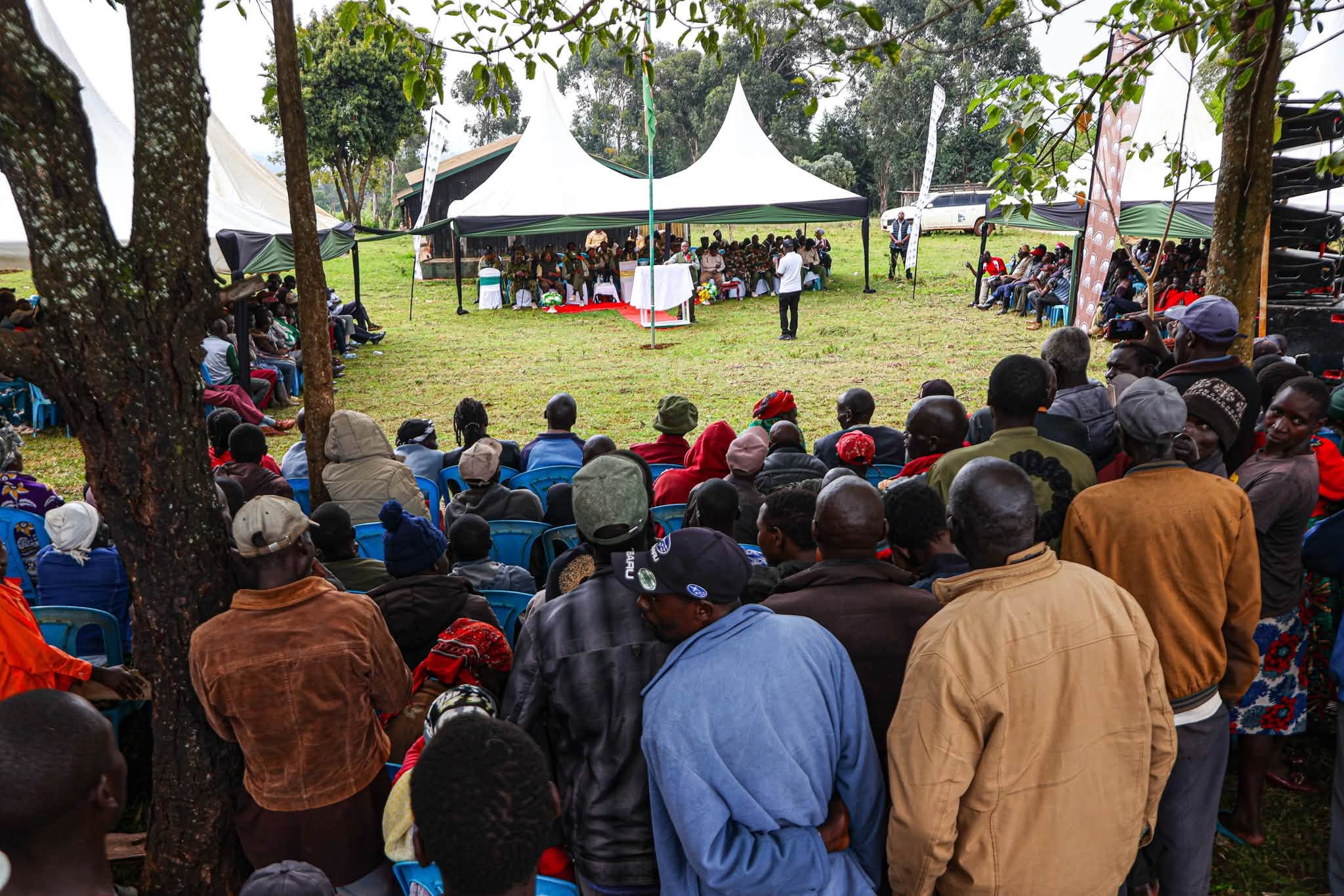
Environment CS Dr Deborah Barasa Champions Community Cohesion and Conservation in Saboti Forest
For a region that has weathered its share of administrative sensitivities and socio economic friction over the years, the visit felt less like a traditional government tour and more like a collective clearing of the air. Dr Barasa’s mission was clear: to anchor environmental conservation not just in policy directives, but in the everyday dignity, security, and livelihoods of the people who call the forest edge home.
Accompanying the Cabinet Secretary was Principal Secretary for Mining Harry Kimtai—who also serves as the national patron for the 15 billion tree growing strategy in Mt Elgon—alongside Kenya Forest Service Board Director Jane Simita, Trans Nzoia County Commissioner A Hussein, KFS Chairman Titus Korir, Acting Senior Manager for Legal Services Laura Yego, Regional Forest Conservator John Rono, County Forest Conservator Joseph Mbugua, Participatory Forest Management Plan Officer Caro Busuuru, CFA Coordinator Josyline Thambu, and a robust contingent of other national and county leaders.
Empowering Grassroots Stewards
At the heart of the day's discussions was the indispensable role played by the county’s eight registered Community Forest Associations. Spanning 45,668.2 hectares of gazetted land across Trans Nzoia—from Sosio and Kimothon to Kiptogot, Suam, and Kitale Township—these associations unite over 7,000 members. Farmers, youth, women, and persons with disabilities work shoulder to shoulder with forest rangers under frameworks designed to turn historical friction into cooperative stewardship.
Dr Barasa stressed that Mt Elgon is far more than a timber or wildlife reserve; it is the vital water tower sustaining millions downstream. To ensure communities have a vested stake in protecting these crucial catchments, the Cabinet Secretary directed the Kenya Forest Service to aggressively expand the Plantation Establishment and Livelihood Improvement Scheme, widely known as PELIS. The framework allows adjacent smallholder farmers to cultivate food crops alongside newly planted tree seedlings during the crucial early stages of forest establishment.
“Conserving our natural heritage requires active, respectful partnership with the people who live closest to these ecosystems,” Dr Barasa noted, adding that through structured collaboration, the nation can protect its vital water towers while ensuring households can put food on the table.
Sustainable Growth and Future Outlook
The Cabinet Secretary also spotlighted the tangible dividends of the FAO/GEF 7 program. Across the county's forest stations, local groups have mobilized to produce hundreds of thousands of indigenous seedlings, spearhead landscape rehabilitation partnerships with corporate and public entities like KenGen and Jumbo Charge, and champion sustainable ventures such as modern beekeeping in Kiptogot and Suam.
Adding momentum to these grassroots efforts, KFS—in partnership with the National Youth Service and the State Department for Housing—is currently establishing a mega tree nursery at Sikhendu Forest Station designed to pump out a staggering 18 million seedlings.
As the consultative forum drew to a close, the prevailing sentiment was one of cautious optimism. Backed by a unified multi agency delegation, the gathering in Saboti signaled a quiet turning point: a community choosing to heal its landscape and its relationships at the very same time.